Temple University Athletics
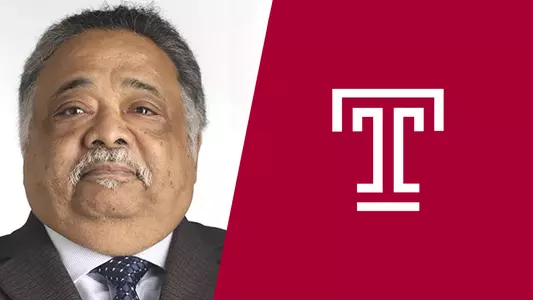
Hall of Fame Spotlight: Lee Roberts, Administration
10.16.24 | General
One of the longest tenured athletics administrators in Temple history, Lee Roberts has been a stalwart on campus for over four decades. A 1982 Temple University graduate, he joined the athletics staff in 1984 as Director of Football Operations, a position he held for 12 years. He then moved on to oversee athletics facilities and has been promoted three times over the last nine years. During his forty-plus years on campus, he has helped host and facilitate numerous conference and national competitions including NCAA women's and men's basketball tournament games and the 2023 NCAA Women's Rowing Championship.
Roberts, who will be inducted into the Temple Athletics Hall of Fame on Oct. 18, recently sat down with OwlSports.com about his career.
What brought you to Temple University over 40 years ago?
I'm a Philadelphia kid. I'm a product of the Philadelphia school system. I grew up here in North Philly, about five minutes from Temple. I knew about Temple due to my upbringing here. I graduated from Central and then came to Temple (as a student). I had no intentions of getting into athletics until I received a call from one of my best friends, Spencer Prescott (former assistant coach), and he had just been hired by Bruce Arians as head football coach. They were looking for a director of operations and he said, "Bruce wants somebody who knows Temple, and I know you know Temple." And I said "Yeah." So I came in and that's how it all started in 1983. I started out as director of operations and progressed from there.
What is the biggest thing you learned from Bruce Arians, who was head coach at Temple for six seasons from 1983-88 and would go on to win a Super Bowl with the Tampa Bay Buccaneers in 2020?
Bruce came in as a young coach and the biggest thing for me was that he was with Coach Bear Bryant at Alabama. The one thing that stood out about Bruce was his relationship with the players. He was a players' coach, even when he was in college. Very straightforward. It was a tough love for our kids. He believed in being tough. The game of football to him was line up, man on man, and let's play. That's how it was, and the kids loved him. We didn't have the success we would have liked to have had during his tenure, but you knew then that he could coach. There was no question about that. When you can win over the players like he did, you knew good things would happen for him.
He taught me a lot about preparation. My first time out at a game, I didn't set up enough tables. But the worst part about it was that I did not go down to check. I got ripped that morning, and it was bad. I got it fixed, but the thing that impressed me more than anything was that afterwards, he came back to me and expressed to me why he was upset. It wasn't the fact that there were tables missing, it's the fact that we could have prevented it by checking. And ever since then, that's how I operate. We check, we double check, we triple check. And it's really been beneficial to me.
Looking back during your tenure as a Director of Football Operations, what was the defining part of that experience that you've taken forward?
Probably more than anything else was relationships. I had the opportunity to come in contact with all of our players. I got to meet them from the time we recruited them, to the time they arrived, to the time they were done. It was impactful for me to watch them come in as boys and leave as young men. It was really gratifying for me that I was able to impart some wisdom or something in their lives that helps them later on. And to watch them come back with their children, and to be able to tell their children the stories about their dads. That has probably been the most rewarding thing for me. I love to win, but sometimes there are things that are a little more important than winning and it's impacting the young men's lives that I came in contact with. They were the energy and the 'why we do it'. As you get older, you realize that and you help them with different things. They all became my sons. I have two boys of my own and I wound up having, at any given time, 110 sons. Because that's just how we wanted to treat them.
How did you transition from the football side of intercollegiate athletics to the administrative side and what went into that decision?
Dave O'Brien, our former athletic director, came to me and gave me the opportunity to be an Assistant AD and manage our facilities. You can imagine my reluctance because football is all I knew. He sat down with me and shared that he thought it would be a great career move. Going from football ops to facilities and managing events should be a simple transition – and it was. Much of my experience that I gained in football translates to what I do in facilities. It's really planning and executing, and doing it all over again.
I carried some of the characteristics that I learned from Bruce. Staff is everything. A leader needs to be a servant leader. If I don't value my people, I can't be successful – we can't be successful. So at the end of the day, probably the biggest lesson I learned from Bruce was to appreciate your staff. Facilities and operations sometimes can be difficult, with long hours. I always want to make sure I show my staff the appreciation for their effort and the sacrifices they make, because people don't realize sometimes when a basketball game happens, they just see the game. But there is so much that goes on before, we are generally here an hour and a half to two hours after. When you go home, you don't go to sleep, you're kind of up for a minute. Then you go to bed, the next thing you know, you might have a game the next day. So it's understanding and appreciating what they do, realizing they have families. That's probably the biggest thing for me.
You've seen a lot of different changes over your time on campus in terms of facilities. Can you talk through some of the highlights in your career?
I think age gives you the advantage of having a point of reference. I used to always get on my parents when they said, "I remember when..." And now I catch myself saying the same thing. Probably for me, the highlight is the investment into our student-athletes (the University has made). When I arrived in 1983 with Bruce, our weight room for football was in the locker room. It was in the back of the locker room. And people would say 'No way!' and I would say 'Yeah, it was." Watching the evolution of our facilities. We experienced an expanded and intense growth a couple of years ago, Temple Sports Complex (TSC) came online. We were practicing up at Ambler campus. There aren't many people who remember, our student-athletes had to travel 45 minutes to practice, and then 45 minutes back. TSC, now we have the new Tennis Complex, we have the Star Complex. So many other things have improved. And of course, the addition of the Liacouras Center. There are a few people who remember playing UMass at McGonigle. Playing to a packed house of 4,000, jamming people in there. Having a point of reference and seeing where we were and where we are, facilities shows your investment in your student-athletes. That's what the student-athletes see and are in every day. If you're trying to provide them the best, I think it speaks volumes to how you feel about them as a program. So when you go down to TSC, each team has their own dedicated field, their own locker room. It's a nice facility. It makes them feel good. The investment that the University has made over the last 10 years has been great.
You've seen a lot of events over the years - any that stand out to you as the most memorable?
I think in football, it would probably be two games. The year we beat University of Pittsburgh (in 1984) on a last-second field goal at the Vet, followed by a Beach Boys concert. It was phenomenal. We played that game and there was nobody in the stands the first two quarters because nobody thought we could beat them. In the third quarter, it began to fill up and by the fourth quarter, it was full because people were there to see the Beach Boys. And sure enough, we go down the field and Jim Cooper, one of the few straight-on kickers, kicks the game-winning field goal and we just party on with the Beach Boys that day.
One of the more exciting moments for me was when we played Notre Dame at Lincoln Financial Field (in 2015). To experience 69,000 fans, here in Philadelphia, watching a Temple football game. Right before kickoff, you usually walk the perimeter to make sure everything is good. I literally took a stroll right across the field. I really wanted to take it all in. I had never experienced that in all my time here.
In basketball, it was the opening of the Liacouras Center. We played Fresno State with Jerry Tarkanian. And the scoreboard, one of the fireworks caught on fire *laughs*. That and our win over Michigan State are the two games that standout as far as basketball.
I think my experiences with people outweigh what I've seen event wise. To work with great people, I worked with Bruce Arians, a Super Bowl winning coach. Dawn Staley, we saw her when she was just getting started. Coach Chaney, Coach Dunphy, there aren't a lot of people that can say they've met those caliber of coaches in their lifetime. Probably the number one thing about all of them is that they were all great people. I've been blessed with that.
What does it mean to you to be inducted into the Temple University Hall of Fame?
I'll be completely transparent. I'm a sports purist. When you look at the Hall of Fame, the people who are inducted have achieved through numbers or what they do in their sport. I never thought there was a place for administrators or front office people. I was talking to a friend, I was excited about being inducted but I felt a little awkward about it. He says, "You know, it's usually because you've made a difference." And I was humbled and I am to this moment, to think that I was worthy of this honor and maybe people think I've made a difference. I hope that I have. I think all you want to do in life is make sure you work hard, try to be a good person, and be good to others. So I hope in my positions both as director of football ops or with facilities, people walk away from an event or they walk away from the football team and they say, "You know, he's a good guy and he helped me a little bit." I'm humbled, still a little bit in shock, and extremely appreciative.
Roberts, who will be inducted into the Temple Athletics Hall of Fame on Oct. 18, recently sat down with OwlSports.com about his career.
What brought you to Temple University over 40 years ago?
I'm a Philadelphia kid. I'm a product of the Philadelphia school system. I grew up here in North Philly, about five minutes from Temple. I knew about Temple due to my upbringing here. I graduated from Central and then came to Temple (as a student). I had no intentions of getting into athletics until I received a call from one of my best friends, Spencer Prescott (former assistant coach), and he had just been hired by Bruce Arians as head football coach. They were looking for a director of operations and he said, "Bruce wants somebody who knows Temple, and I know you know Temple." And I said "Yeah." So I came in and that's how it all started in 1983. I started out as director of operations and progressed from there.
What is the biggest thing you learned from Bruce Arians, who was head coach at Temple for six seasons from 1983-88 and would go on to win a Super Bowl with the Tampa Bay Buccaneers in 2020?
Bruce came in as a young coach and the biggest thing for me was that he was with Coach Bear Bryant at Alabama. The one thing that stood out about Bruce was his relationship with the players. He was a players' coach, even when he was in college. Very straightforward. It was a tough love for our kids. He believed in being tough. The game of football to him was line up, man on man, and let's play. That's how it was, and the kids loved him. We didn't have the success we would have liked to have had during his tenure, but you knew then that he could coach. There was no question about that. When you can win over the players like he did, you knew good things would happen for him.
He taught me a lot about preparation. My first time out at a game, I didn't set up enough tables. But the worst part about it was that I did not go down to check. I got ripped that morning, and it was bad. I got it fixed, but the thing that impressed me more than anything was that afterwards, he came back to me and expressed to me why he was upset. It wasn't the fact that there were tables missing, it's the fact that we could have prevented it by checking. And ever since then, that's how I operate. We check, we double check, we triple check. And it's really been beneficial to me.
Looking back during your tenure as a Director of Football Operations, what was the defining part of that experience that you've taken forward?
Probably more than anything else was relationships. I had the opportunity to come in contact with all of our players. I got to meet them from the time we recruited them, to the time they arrived, to the time they were done. It was impactful for me to watch them come in as boys and leave as young men. It was really gratifying for me that I was able to impart some wisdom or something in their lives that helps them later on. And to watch them come back with their children, and to be able to tell their children the stories about their dads. That has probably been the most rewarding thing for me. I love to win, but sometimes there are things that are a little more important than winning and it's impacting the young men's lives that I came in contact with. They were the energy and the 'why we do it'. As you get older, you realize that and you help them with different things. They all became my sons. I have two boys of my own and I wound up having, at any given time, 110 sons. Because that's just how we wanted to treat them.
How did you transition from the football side of intercollegiate athletics to the administrative side and what went into that decision?
Dave O'Brien, our former athletic director, came to me and gave me the opportunity to be an Assistant AD and manage our facilities. You can imagine my reluctance because football is all I knew. He sat down with me and shared that he thought it would be a great career move. Going from football ops to facilities and managing events should be a simple transition – and it was. Much of my experience that I gained in football translates to what I do in facilities. It's really planning and executing, and doing it all over again.
I carried some of the characteristics that I learned from Bruce. Staff is everything. A leader needs to be a servant leader. If I don't value my people, I can't be successful – we can't be successful. So at the end of the day, probably the biggest lesson I learned from Bruce was to appreciate your staff. Facilities and operations sometimes can be difficult, with long hours. I always want to make sure I show my staff the appreciation for their effort and the sacrifices they make, because people don't realize sometimes when a basketball game happens, they just see the game. But there is so much that goes on before, we are generally here an hour and a half to two hours after. When you go home, you don't go to sleep, you're kind of up for a minute. Then you go to bed, the next thing you know, you might have a game the next day. So it's understanding and appreciating what they do, realizing they have families. That's probably the biggest thing for me.
You've seen a lot of different changes over your time on campus in terms of facilities. Can you talk through some of the highlights in your career?
I think age gives you the advantage of having a point of reference. I used to always get on my parents when they said, "I remember when..." And now I catch myself saying the same thing. Probably for me, the highlight is the investment into our student-athletes (the University has made). When I arrived in 1983 with Bruce, our weight room for football was in the locker room. It was in the back of the locker room. And people would say 'No way!' and I would say 'Yeah, it was." Watching the evolution of our facilities. We experienced an expanded and intense growth a couple of years ago, Temple Sports Complex (TSC) came online. We were practicing up at Ambler campus. There aren't many people who remember, our student-athletes had to travel 45 minutes to practice, and then 45 minutes back. TSC, now we have the new Tennis Complex, we have the Star Complex. So many other things have improved. And of course, the addition of the Liacouras Center. There are a few people who remember playing UMass at McGonigle. Playing to a packed house of 4,000, jamming people in there. Having a point of reference and seeing where we were and where we are, facilities shows your investment in your student-athletes. That's what the student-athletes see and are in every day. If you're trying to provide them the best, I think it speaks volumes to how you feel about them as a program. So when you go down to TSC, each team has their own dedicated field, their own locker room. It's a nice facility. It makes them feel good. The investment that the University has made over the last 10 years has been great.
You've seen a lot of events over the years - any that stand out to you as the most memorable?
I think in football, it would probably be two games. The year we beat University of Pittsburgh (in 1984) on a last-second field goal at the Vet, followed by a Beach Boys concert. It was phenomenal. We played that game and there was nobody in the stands the first two quarters because nobody thought we could beat them. In the third quarter, it began to fill up and by the fourth quarter, it was full because people were there to see the Beach Boys. And sure enough, we go down the field and Jim Cooper, one of the few straight-on kickers, kicks the game-winning field goal and we just party on with the Beach Boys that day.
One of the more exciting moments for me was when we played Notre Dame at Lincoln Financial Field (in 2015). To experience 69,000 fans, here in Philadelphia, watching a Temple football game. Right before kickoff, you usually walk the perimeter to make sure everything is good. I literally took a stroll right across the field. I really wanted to take it all in. I had never experienced that in all my time here.
In basketball, it was the opening of the Liacouras Center. We played Fresno State with Jerry Tarkanian. And the scoreboard, one of the fireworks caught on fire *laughs*. That and our win over Michigan State are the two games that standout as far as basketball.
I think my experiences with people outweigh what I've seen event wise. To work with great people, I worked with Bruce Arians, a Super Bowl winning coach. Dawn Staley, we saw her when she was just getting started. Coach Chaney, Coach Dunphy, there aren't a lot of people that can say they've met those caliber of coaches in their lifetime. Probably the number one thing about all of them is that they were all great people. I've been blessed with that.
What does it mean to you to be inducted into the Temple University Hall of Fame?
I'll be completely transparent. I'm a sports purist. When you look at the Hall of Fame, the people who are inducted have achieved through numbers or what they do in their sport. I never thought there was a place for administrators or front office people. I was talking to a friend, I was excited about being inducted but I felt a little awkward about it. He says, "You know, it's usually because you've made a difference." And I was humbled and I am to this moment, to think that I was worthy of this honor and maybe people think I've made a difference. I hope that I have. I think all you want to do in life is make sure you work hard, try to be a good person, and be good to others. So I hope in my positions both as director of football ops or with facilities, people walk away from an event or they walk away from the football team and they say, "You know, he's a good guy and he helped me a little bit." I'm humbled, still a little bit in shock, and extremely appreciative.
Thursday, October 15
Tuesday, October 13
Monday, October 12
Saturday, October 10