Temple University Athletics
Volleyball Feature: Setting the Tone
9.25.18 | Women's Volleyball
Temple's Setters "Quarterback" the Offense
Even casual sports fans know the impact of a good quarterback on a football team or a good point guard on a basketball team. However, most casual sports fans would probably overlook the setter position in volleyball.
Outside hitters that rack up kills get noticed. Middles throwing down huge blocks get noticed. Liberos making diving digs get noticed. But the setters that are involved in every play? They get overlooked.
Maybe it's the name of the position. On most professional rosters in Europe, the setter position is called the quarterback. That's probably a better term for what setters do in volleyball.
But unlike star quarterbacks and star point guards, what often defines their position, is being okay with being overlooked.
Temple Associate Head Coach and Recruiting Coordinator, Akiko Hatekeyama, actually looks for players like this when the staff is recruiting future setters.
"I look for physicality on the floor and rhythm and the technical aspect, I'm pretty picky about that," she explained. "But at the same time, I'm looking for personality characteristics, if she's attention seeking or needs the spotlight, you can sense that vibe.
"I look for signs that the setter is a team player. Is she all about herself, or is she doing everything she can to help her teammates? With a good setter, you never notice when they're having a bad day."
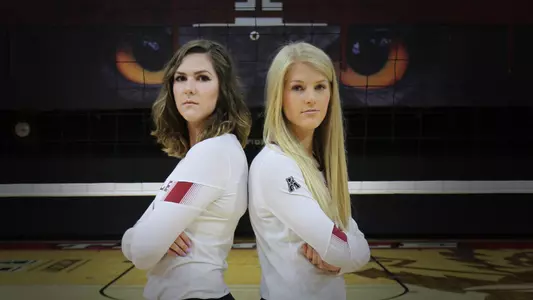
Temple has a pair of talented "quarterbacks" on the squad in senior Hannah Vandegrift and freshman Tyler Lindgren. The duo splits rotations, with their stats virtually identical – Vandegrift has averaged 5.30 assists per set, while Lindgren is at 5.04 per frame.
Vandegrift, Lindgren, and Hatekeyama, who was an All-District setter for Temple that later played professionally, all started their careers at setter and have never played anywhere else. And like fans that can sometimes overlook the position in favor of the more exciting ones, often times kids starting out in the sport would rather be hitters. So it's up to coaches recognizing their potential early or simply their physical characteristics to get started at setter.
At 12, Vandegrift's coach told her she had "good hands," so she was told that's what her position would be. At nine, Lindgren was too small to serve the ball overhand from the 10-foot line, so she said setter was about all she could play physically. It didn't hurt that her aunt and coach, Trisha (Lindgren) Kroll, was a setter for Kansas that recorded over 1,000 career assists.
Hatekeyama was the opposite height-wise compared to Lindgren -- she stood tall for Japanese standards. However, when asked what position she wanted to play, she wasn't enticed by any of the hitting positions, but was intrigued about what the student managers were doing around the court – setting up the nets, taking stats, etc. So early on, her coach told her that she could be a successful setter and he'd train her as one.
"Maybe that's one of the characteristics that my coach saw in me," said Hatekeyama. "I never needed the attention or spotlight."
It didn't matter how they started as setters, though, they all grew to love the position, despite it not coming with the same glory as some of the other positions.
"I like the strategy behind the position," noted Lindgren. "I don't need the attention of a kill, that's not why I like the game. I'd rather put my hitters in the best position to get the kill, I don't need the praise."
The setter position is a perfect combination of physical and technical. Not only your own physical and technical abilities, your hitters' abilities as well. A good setter has athleticism, ball handling ability, game strategy, and leadership in their repertoire.
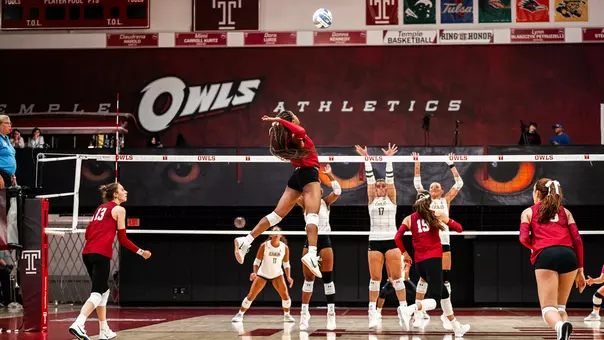
When the ball is served or crosses the net, the setter is the second touch and the touch that leads to the attack. The defense receives or digs the ball, the setter perfectly puts it up for the hitter she wants to attack, and the hitter swings for the kill.
Whether it's Vandegrift or Lindgren on the court, the setter is the primary play caller for the Owls. Before a serve, they will indicate to their hitters what play they're calling, and execute it once the serve comes.
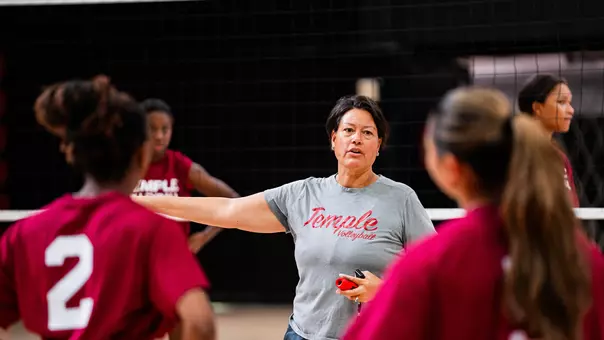
Hatekeyama, Temple's setting coach, lets her setters run their game. "I try not to overdo it. They create the offense and feel out the plays in the crucial moment. I give some advice and feedback, like this person is having a great day, or there's a big blocker here, but for the most part, they make these decisions."
Part of the decision making that goes into play calling forces setters to have to memorize two scouting reports – the opponent and their own team. Each of Temple's hitters has different needs for the kind of sets she gets, and it's up to the setter to deliver.
"Setters have to know the sets and the system and individual preferences for the hitters," explained Lindgren. "On a brand new team, I needed a lot of feedback at first. But now, we're making a lot better connections."
As a senior, Vandegrift has helped Lindgren learn the preferences for her hitters and still helps give advice, reassurances, and feedback to her rookie counterpart.
"Anytime we come off, I go over to her immediately," said Vandegrift. "Even when she's doing great, I just try to let her know that she's making good decisions, and she's doing a good job."
Teams designate captains for the season, but on court, each setter is the captain of the offense. They need to keep the team balanced and mentally in the match, whether or not points go their way.
"Setters make the calls, they make the plays, we make sure everyone knows what they're doing at all times," said Vandegrift.
The weight of the game is sometimes on the setters' backs, or hands that is. They provide the spark when the team needs more energy or the calming influence when the team has too much energy.
"A setter needs to be a lot of things sometimes," explained Hatekeyama. "They take all the responsibility and all the blame, but they also have to be a motivator. Everyone looks at the setter every single play or every single rally, so they need to be emotionally consistent all the time."
The next time you watch a Temple volleyball match, pay special attention to the setters. Not because they want or need it, but because they deserve it.

Outside hitters that rack up kills get noticed. Middles throwing down huge blocks get noticed. Liberos making diving digs get noticed. But the setters that are involved in every play? They get overlooked.
Maybe it's the name of the position. On most professional rosters in Europe, the setter position is called the quarterback. That's probably a better term for what setters do in volleyball.
But unlike star quarterbacks and star point guards, what often defines their position, is being okay with being overlooked.
Temple Associate Head Coach and Recruiting Coordinator, Akiko Hatekeyama, actually looks for players like this when the staff is recruiting future setters.
"I look for physicality on the floor and rhythm and the technical aspect, I'm pretty picky about that," she explained. "But at the same time, I'm looking for personality characteristics, if she's attention seeking or needs the spotlight, you can sense that vibe.
"I look for signs that the setter is a team player. Is she all about herself, or is she doing everything she can to help her teammates? With a good setter, you never notice when they're having a bad day."
Temple has a pair of talented "quarterbacks" on the squad in senior Hannah Vandegrift and freshman Tyler Lindgren. The duo splits rotations, with their stats virtually identical – Vandegrift has averaged 5.30 assists per set, while Lindgren is at 5.04 per frame.
Vandegrift, Lindgren, and Hatekeyama, who was an All-District setter for Temple that later played professionally, all started their careers at setter and have never played anywhere else. And like fans that can sometimes overlook the position in favor of the more exciting ones, often times kids starting out in the sport would rather be hitters. So it's up to coaches recognizing their potential early or simply their physical characteristics to get started at setter.
At 12, Vandegrift's coach told her she had "good hands," so she was told that's what her position would be. At nine, Lindgren was too small to serve the ball overhand from the 10-foot line, so she said setter was about all she could play physically. It didn't hurt that her aunt and coach, Trisha (Lindgren) Kroll, was a setter for Kansas that recorded over 1,000 career assists.
Hatekeyama was the opposite height-wise compared to Lindgren -- she stood tall for Japanese standards. However, when asked what position she wanted to play, she wasn't enticed by any of the hitting positions, but was intrigued about what the student managers were doing around the court – setting up the nets, taking stats, etc. So early on, her coach told her that she could be a successful setter and he'd train her as one.
"Maybe that's one of the characteristics that my coach saw in me," said Hatekeyama. "I never needed the attention or spotlight."
It didn't matter how they started as setters, though, they all grew to love the position, despite it not coming with the same glory as some of the other positions.
"I like the strategy behind the position," noted Lindgren. "I don't need the attention of a kill, that's not why I like the game. I'd rather put my hitters in the best position to get the kill, I don't need the praise."
The setter position is a perfect combination of physical and technical. Not only your own physical and technical abilities, your hitters' abilities as well. A good setter has athleticism, ball handling ability, game strategy, and leadership in their repertoire.
When the ball is served or crosses the net, the setter is the second touch and the touch that leads to the attack. The defense receives or digs the ball, the setter perfectly puts it up for the hitter she wants to attack, and the hitter swings for the kill.
Whether it's Vandegrift or Lindgren on the court, the setter is the primary play caller for the Owls. Before a serve, they will indicate to their hitters what play they're calling, and execute it once the serve comes.
Hatekeyama, Temple's setting coach, lets her setters run their game. "I try not to overdo it. They create the offense and feel out the plays in the crucial moment. I give some advice and feedback, like this person is having a great day, or there's a big blocker here, but for the most part, they make these decisions."
Part of the decision making that goes into play calling forces setters to have to memorize two scouting reports – the opponent and their own team. Each of Temple's hitters has different needs for the kind of sets she gets, and it's up to the setter to deliver.
"Setters have to know the sets and the system and individual preferences for the hitters," explained Lindgren. "On a brand new team, I needed a lot of feedback at first. But now, we're making a lot better connections."
As a senior, Vandegrift has helped Lindgren learn the preferences for her hitters and still helps give advice, reassurances, and feedback to her rookie counterpart.
"Anytime we come off, I go over to her immediately," said Vandegrift. "Even when she's doing great, I just try to let her know that she's making good decisions, and she's doing a good job."
Teams designate captains for the season, but on court, each setter is the captain of the offense. They need to keep the team balanced and mentally in the match, whether or not points go their way.
"Setters make the calls, they make the plays, we make sure everyone knows what they're doing at all times," said Vandegrift.
The weight of the game is sometimes on the setters' backs, or hands that is. They provide the spark when the team needs more energy or the calming influence when the team has too much energy.
"A setter needs to be a lot of things sometimes," explained Hatekeyama. "They take all the responsibility and all the blame, but they also have to be a motivator. Everyone looks at the setter every single play or every single rally, so they need to be emotionally consistent all the time."
The next time you watch a Temple volleyball match, pay special attention to the setters. Not because they want or need it, but because they deserve it.

Players Mentioned

S
/ Women's Volleyball
S
/ Women's VolleyballTuesday, June 02
Saturday, May 30
Tuesday, May 19
Tuesday, May 05