Temple University Athletics

From the Islands to Philadelphia: Weathering the Challenges Together
3.7.19 | Women's Track and Field
"You should never view your challenges as a disadvantage. Instead, it's important for you to understand that your experience facing and overcoming adversity is actually one of your biggest advantages." – Michelle Obama
Leaving home for the first time to attend college is a challenging feat for many. Some hold tight to the familiarity of their home states, with the ability to hop on a bus and return to where they grew up in a matter of hours. Many fly far away from home, anxious to explore different ends of the country they were raised in. Some, however, face an entirely new adventure, jumping on a plane and heading thousands of miles overseas to see the United States for the first time.
While seven of the current 26 members of the Temple track and field roster have faced the courageous challenge of leaving their home countries to run in college, three freshmen have shared a unique journey, packing their bags and moving to Philadelphia from their home Caribbean islands. Kennedy Culmer, Marissa White and Jamie Drayton come from islands of the West Indies, flying a combined 4,069 miles to attend Temple University in the heart of North Philadelphia.
While all international students face the various challenges that come along with being far from home and immersed in a drastically different culture, this freshman trio has had to overcome significant life adjustments to live out their lifelong dreams of running collegiate track in the States.
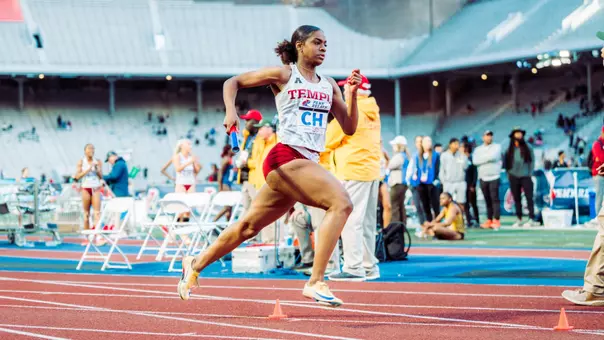
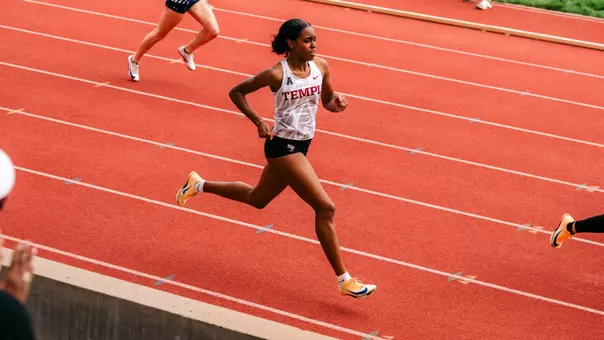
Culmer, who ran the fastest 60m dash for the Owls this past indoor season, came to Philadelphia from Freeport, Bahamas. A small beach town with a population just under 30,000, little major infrastructure and only a handful of places to go for entertainment, it can be recognized as a polar opposite to the city of Philadelphia.
White, a standout freshman sprinter who clocked the fastest 200m and 400m times for the Owls this season, is native to Nassau, Bahamas. Drastically more populous than Freeport, Nassau is the largest city in the Bahamas and is home to over 266,000 people.
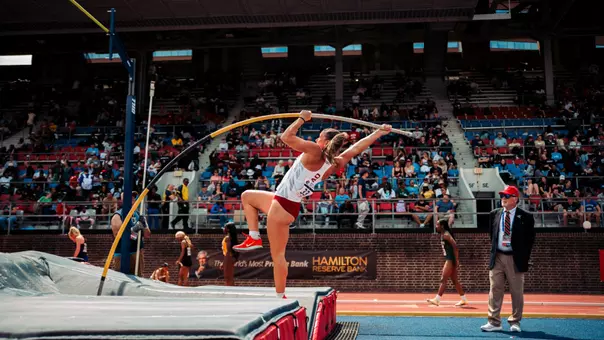
Drayton, who recorded the furthest mark in the long jump for Temple this indoor season, had the farthest commute to Philadelphia, coming 2,085 miles from Christ Church, Barbados. One of the 11 Parishes that constitute Barbados, Christ Church is on the south end with a population of roughly 54,000.
Despite facing a massive change of pace when coming from their peaceful hometowns to the 1.5 million-person city of Philadelphia, not one of these student-athletes claimed population to be the hardest adjustment in the transition. Instead, they all chose something that they passionately agreed on.
"The hardest thing about moving here? That's easy—the weather," exclaimed Culmer. "The coldest weather I have ever felt before coming to America was about 57 degrees, and I was absolutely freezing. This weather is simply unimaginable."
She's right. In her hometown of Freeport, even the coldest months of January and February face an average low temperature of about 61 degrees Fahrenheit, compared to Philadelphia's average low of 26 degrees in those same months. White and Drayton relate to Culmer, coming from cities with average low temperatures of 66 and 72 degrees, respectively.
Fortunately, these three are not alone in adjusting to the major changes that come with moving from the islands to the States. In fact, one of their biggest allies in the transition is the one who brought them here in the first place, and is helping them live out their dreams.
Head coach Elvis Forde is no stranger to the islands, as he grew up just 40 minutes north of Culmer in the Parish of Saint Andrew, Barbados. In 1979, he left his small town of nearly 5,000 people to move to the United States to run track on a full scholarship at Murray State in Kentucky. To this day, Forde vividly remembers his first morning as a student-athlete in America.
"I remember waking up in that dorm the morning after my flight had landed," reflected Forde. "The sun was shining, and outside it looked bright and beautiful. I got up and put on shorts, a t-shirt and flip-flops to head outside and grab breakfast. I will never forget walking down that hallway, opening the door and feeling the cold air that hit me. It was about 54 degrees on an August morning, and all I could think to myself was, 'what have I done?'"
Despite Forde's college coach confiscating his passport to ensure he would not evacuate the cold weather before without notice, he had his doubts of whether he would ever adapt well enough to be happy in America. Regardless of this major hurdle, Forde was determined to make the most of his skillset and the opportunity to run at the Division I level in the States—and he exceeded all expectations.
At Murray State, Forde was a two-time All-American before following his head coach and mentor to Southern Illinois University. At SIU, he garnered four more All-American honors and went on to be one of the best 400m runners in the country. Resetting multiple program records, Forde helped his team to a number of championships and a fourth place finish as a team at the NCAA level. To this day, he still holds the Barbadian 400m record at 45.32, set in the 1984 Olympic Games in Los Angeles. Overall, he finished his illustrious running career a six-time NCAA All-American, two-time National Amateur Champion and a member of the 1984 and 1988 Olympic teams.
"I never believed that I would make it to America, but I was always a dreamer," said Forde. "There have been many twists and turns along the way, but I wouldn't go back and change any of it for the world. It taught me to be responsible and I learned how to adjust to a new culture. I want to transfer this knowledge to my student-athletes, and help them get better every day to achieve the goals they have set for themselves."
While the mere idea of leaving home and moving to America to attend college was frightening, knowing they would have a mentor that has been through the transition himself was incredibly encouraging for these Temple student-athletes.
"It's great to have somebody that you know will always watch out for you," said Drayton. "He understands everything that we're going through because he's been there himself. Since he is not only from the islands but from Barbados like me, I feel that I always have someone to talk to, and that a piece of home is here with me."
Culmer expressed a similar sentiment, explaining how Forde being from the islands had an impact on her ultimate decision to come to Temple.
"He empathizes with the situation and always tells me that if he can do it, I can do it, too," said Culmer. "He has been very encouraging through the transition. He knows how hard it is to move away from friends and family, but he made it significantly easier."
Forde was also quick to become a mentor to White over her first few months living in Philadelphia.
"I always go into his office just to talk, because there is a sense of familiarity in conversation since he knows where I am coming from," White expressed. "I know he is always here to help if I need anything, and that is comforting while being in a new place."
Forde constantly goes above and beyond to help his three student-athletes from the islands go through as smooth of a transition as possible. Before arriving, he made a point to warn them of the drastically different food, the fast-pace environment, and most importantly—the weather.
"I always tell them to dress warm, no matter what people will think about you," said Forde. "Always have a hat and gloves, because it will be miserable if you are cold. I know that this has to be one of the most difficult times for them, coming from such high temperatures and then not even getting above zero degrees sometimes here."
While the transition may seem impossible, not one of these four that call a Caribbean island home have regretted coming to the freezing-cold States to run in college. In fact, they recommend that anyone that gets the chance to pursue a similar path should take it, because there is no experience quite like it.
"If someone from home was trying to decide whether or not they should come to America for college, I would say don't hesitate to go for it," said White. "It's a great opportunity to experience a lot of new things that you would never be exposed to back home. It makes it feel like all of the hard work is paying off."
Similar to White, Drayton has learned how to adjust to Philadelphia with the help of her coaches and teammates.
"It's definitely different here than home, but you just have to stick with your schedules, practice hard and always do your best no matter what," Drayton said. "The weather—it will be a lot, but it's only cold for so long. When you see yourself jumping farther and watch your teammates continue to get better, it makes it all worth it."
Culmer relates, emphasizing to always take the risk because it will lead to growth in the end.
"The transition is tough, but it will definitely be worth it," Culmer explained. "You learn new things, you grow as a person and you become more mature being further away from home, so embrace every part of it."
For Forde, one of the most important parts of coaching is that his student-athletes give their best efforts in all that they do. The legacy a person leaves behind is important to those who follow, and he hopes to have a positive impact on everyone he comes across.
"I'm very excited about having them here at Temple, and I know that their futures are bright on and off the track," said Forde. "The transition was one of the hardest things I have ever done, but it was one of the best decisions of my life. Kennedy, Marissa and Jamie are determined to succeed, and I look forward to the impact that they have on our program for years to come."

Leaving home for the first time to attend college is a challenging feat for many. Some hold tight to the familiarity of their home states, with the ability to hop on a bus and return to where they grew up in a matter of hours. Many fly far away from home, anxious to explore different ends of the country they were raised in. Some, however, face an entirely new adventure, jumping on a plane and heading thousands of miles overseas to see the United States for the first time.
While seven of the current 26 members of the Temple track and field roster have faced the courageous challenge of leaving their home countries to run in college, three freshmen have shared a unique journey, packing their bags and moving to Philadelphia from their home Caribbean islands. Kennedy Culmer, Marissa White and Jamie Drayton come from islands of the West Indies, flying a combined 4,069 miles to attend Temple University in the heart of North Philadelphia.
While all international students face the various challenges that come along with being far from home and immersed in a drastically different culture, this freshman trio has had to overcome significant life adjustments to live out their lifelong dreams of running collegiate track in the States.
Culmer, who ran the fastest 60m dash for the Owls this past indoor season, came to Philadelphia from Freeport, Bahamas. A small beach town with a population just under 30,000, little major infrastructure and only a handful of places to go for entertainment, it can be recognized as a polar opposite to the city of Philadelphia.
White, a standout freshman sprinter who clocked the fastest 200m and 400m times for the Owls this season, is native to Nassau, Bahamas. Drastically more populous than Freeport, Nassau is the largest city in the Bahamas and is home to over 266,000 people.
Drayton, who recorded the furthest mark in the long jump for Temple this indoor season, had the farthest commute to Philadelphia, coming 2,085 miles from Christ Church, Barbados. One of the 11 Parishes that constitute Barbados, Christ Church is on the south end with a population of roughly 54,000.
Despite facing a massive change of pace when coming from their peaceful hometowns to the 1.5 million-person city of Philadelphia, not one of these student-athletes claimed population to be the hardest adjustment in the transition. Instead, they all chose something that they passionately agreed on.
"The hardest thing about moving here? That's easy—the weather," exclaimed Culmer. "The coldest weather I have ever felt before coming to America was about 57 degrees, and I was absolutely freezing. This weather is simply unimaginable."
She's right. In her hometown of Freeport, even the coldest months of January and February face an average low temperature of about 61 degrees Fahrenheit, compared to Philadelphia's average low of 26 degrees in those same months. White and Drayton relate to Culmer, coming from cities with average low temperatures of 66 and 72 degrees, respectively.
Fortunately, these three are not alone in adjusting to the major changes that come with moving from the islands to the States. In fact, one of their biggest allies in the transition is the one who brought them here in the first place, and is helping them live out their dreams.
Head coach Elvis Forde is no stranger to the islands, as he grew up just 40 minutes north of Culmer in the Parish of Saint Andrew, Barbados. In 1979, he left his small town of nearly 5,000 people to move to the United States to run track on a full scholarship at Murray State in Kentucky. To this day, Forde vividly remembers his first morning as a student-athlete in America.
"I remember waking up in that dorm the morning after my flight had landed," reflected Forde. "The sun was shining, and outside it looked bright and beautiful. I got up and put on shorts, a t-shirt and flip-flops to head outside and grab breakfast. I will never forget walking down that hallway, opening the door and feeling the cold air that hit me. It was about 54 degrees on an August morning, and all I could think to myself was, 'what have I done?'"
Despite Forde's college coach confiscating his passport to ensure he would not evacuate the cold weather before without notice, he had his doubts of whether he would ever adapt well enough to be happy in America. Regardless of this major hurdle, Forde was determined to make the most of his skillset and the opportunity to run at the Division I level in the States—and he exceeded all expectations.
At Murray State, Forde was a two-time All-American before following his head coach and mentor to Southern Illinois University. At SIU, he garnered four more All-American honors and went on to be one of the best 400m runners in the country. Resetting multiple program records, Forde helped his team to a number of championships and a fourth place finish as a team at the NCAA level. To this day, he still holds the Barbadian 400m record at 45.32, set in the 1984 Olympic Games in Los Angeles. Overall, he finished his illustrious running career a six-time NCAA All-American, two-time National Amateur Champion and a member of the 1984 and 1988 Olympic teams.
"I never believed that I would make it to America, but I was always a dreamer," said Forde. "There have been many twists and turns along the way, but I wouldn't go back and change any of it for the world. It taught me to be responsible and I learned how to adjust to a new culture. I want to transfer this knowledge to my student-athletes, and help them get better every day to achieve the goals they have set for themselves."
While the mere idea of leaving home and moving to America to attend college was frightening, knowing they would have a mentor that has been through the transition himself was incredibly encouraging for these Temple student-athletes.
"It's great to have somebody that you know will always watch out for you," said Drayton. "He understands everything that we're going through because he's been there himself. Since he is not only from the islands but from Barbados like me, I feel that I always have someone to talk to, and that a piece of home is here with me."
Culmer expressed a similar sentiment, explaining how Forde being from the islands had an impact on her ultimate decision to come to Temple.
"He empathizes with the situation and always tells me that if he can do it, I can do it, too," said Culmer. "He has been very encouraging through the transition. He knows how hard it is to move away from friends and family, but he made it significantly easier."
Forde was also quick to become a mentor to White over her first few months living in Philadelphia.
"I always go into his office just to talk, because there is a sense of familiarity in conversation since he knows where I am coming from," White expressed. "I know he is always here to help if I need anything, and that is comforting while being in a new place."
Forde constantly goes above and beyond to help his three student-athletes from the islands go through as smooth of a transition as possible. Before arriving, he made a point to warn them of the drastically different food, the fast-pace environment, and most importantly—the weather.
"I always tell them to dress warm, no matter what people will think about you," said Forde. "Always have a hat and gloves, because it will be miserable if you are cold. I know that this has to be one of the most difficult times for them, coming from such high temperatures and then not even getting above zero degrees sometimes here."
While the transition may seem impossible, not one of these four that call a Caribbean island home have regretted coming to the freezing-cold States to run in college. In fact, they recommend that anyone that gets the chance to pursue a similar path should take it, because there is no experience quite like it.
"If someone from home was trying to decide whether or not they should come to America for college, I would say don't hesitate to go for it," said White. "It's a great opportunity to experience a lot of new things that you would never be exposed to back home. It makes it feel like all of the hard work is paying off."
Similar to White, Drayton has learned how to adjust to Philadelphia with the help of her coaches and teammates.
"It's definitely different here than home, but you just have to stick with your schedules, practice hard and always do your best no matter what," Drayton said. "The weather—it will be a lot, but it's only cold for so long. When you see yourself jumping farther and watch your teammates continue to get better, it makes it all worth it."
Culmer relates, emphasizing to always take the risk because it will lead to growth in the end.
"The transition is tough, but it will definitely be worth it," Culmer explained. "You learn new things, you grow as a person and you become more mature being further away from home, so embrace every part of it."
For Forde, one of the most important parts of coaching is that his student-athletes give their best efforts in all that they do. The legacy a person leaves behind is important to those who follow, and he hopes to have a positive impact on everyone he comes across.
"I'm very excited about having them here at Temple, and I know that their futures are bright on and off the track," said Forde. "The transition was one of the hardest things I have ever done, but it was one of the best decisions of my life. Kennedy, Marissa and Jamie are determined to succeed, and I look forward to the impact that they have on our program for years to come."

Players Mentioned
Sprints
/ Women's Track and Field
Jumps
/ Women's Track and Field
Sprints
/ Women's Track and FieldTuesday, June 02
Saturday, May 30
Tuesday, May 19
Tuesday, May 05